I ran a 647-word setup guide I wrote for our shared office printer through Copyleaks AI Detector, then checked the original draft against my saved notes. It marked part of the instructions as AI-written, mostly the section about clearing a paper jam. I wrote the guide myself and only cleaned up the wording before testing it.
Does Copyleaks tend to flag repetitive procedural writing, or could the way I submitted it affect the result? I pasted the text without the screenshots, so the scanned version has several short instructions in a row with almost no explanation between them.
The mistake is treating a detector’s percentage as measured accuracy. I kept confidence, probability, and estimated AI share separate, then checked verdicts against the passages’ known origins. A confident answer could still be wrong.
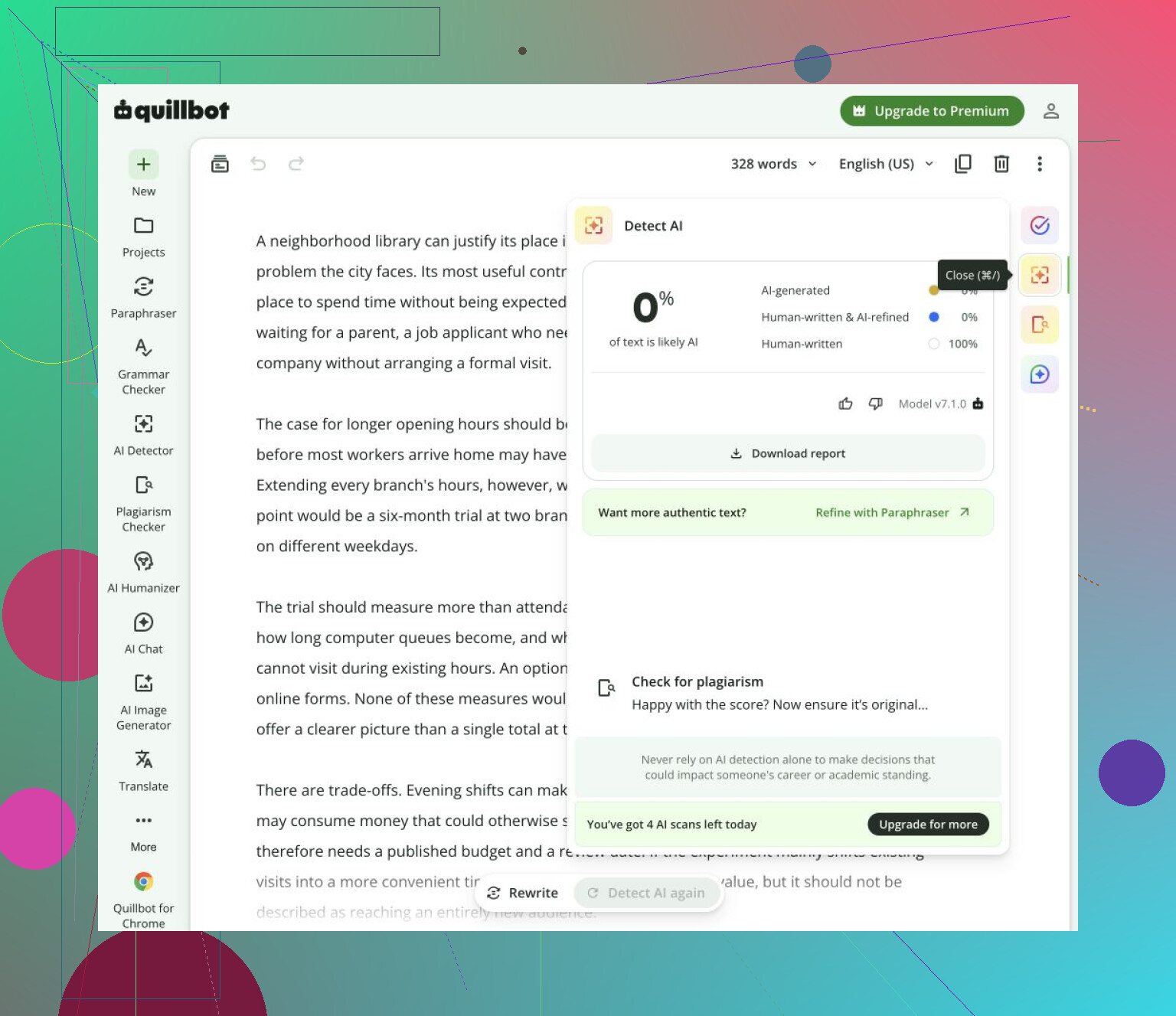
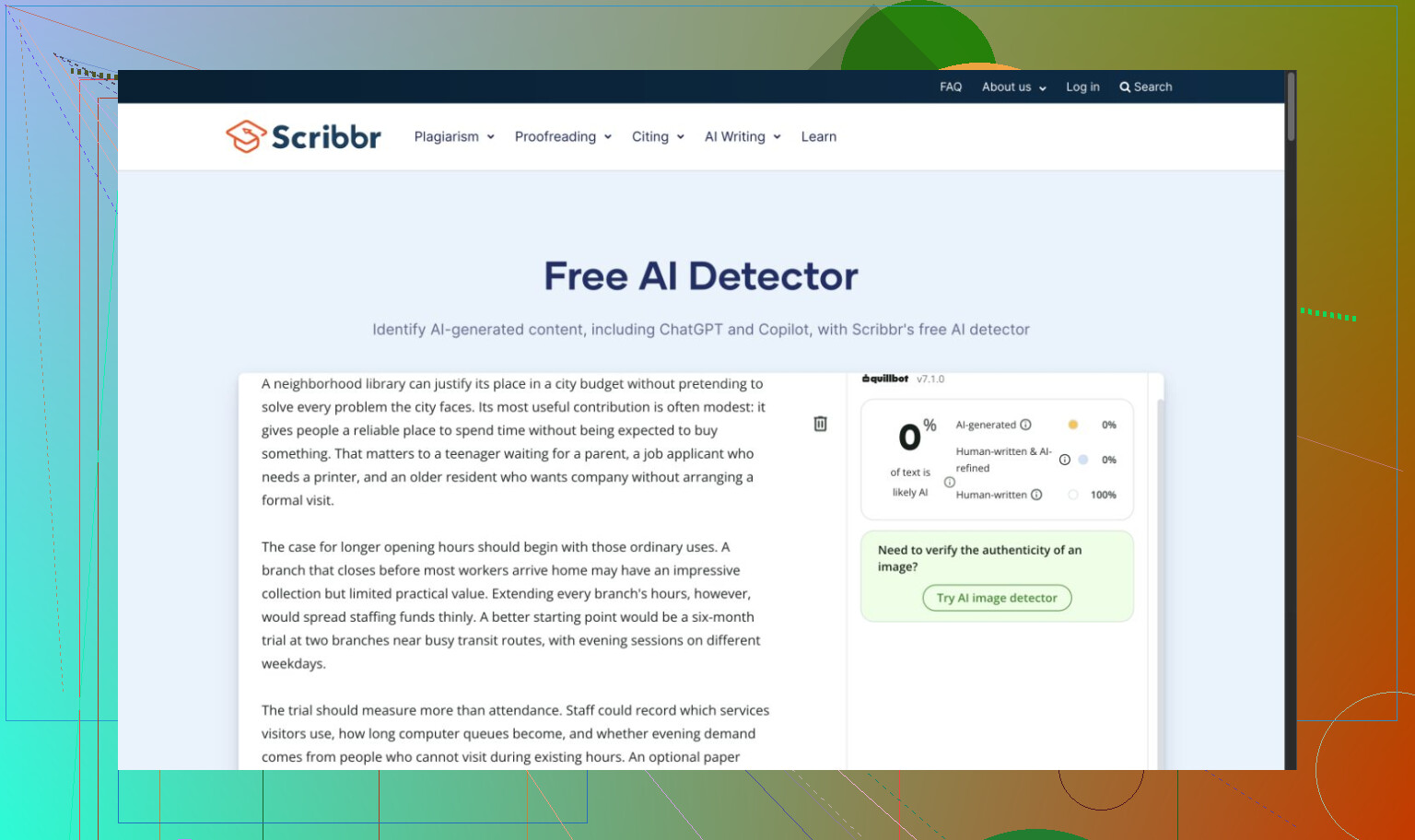
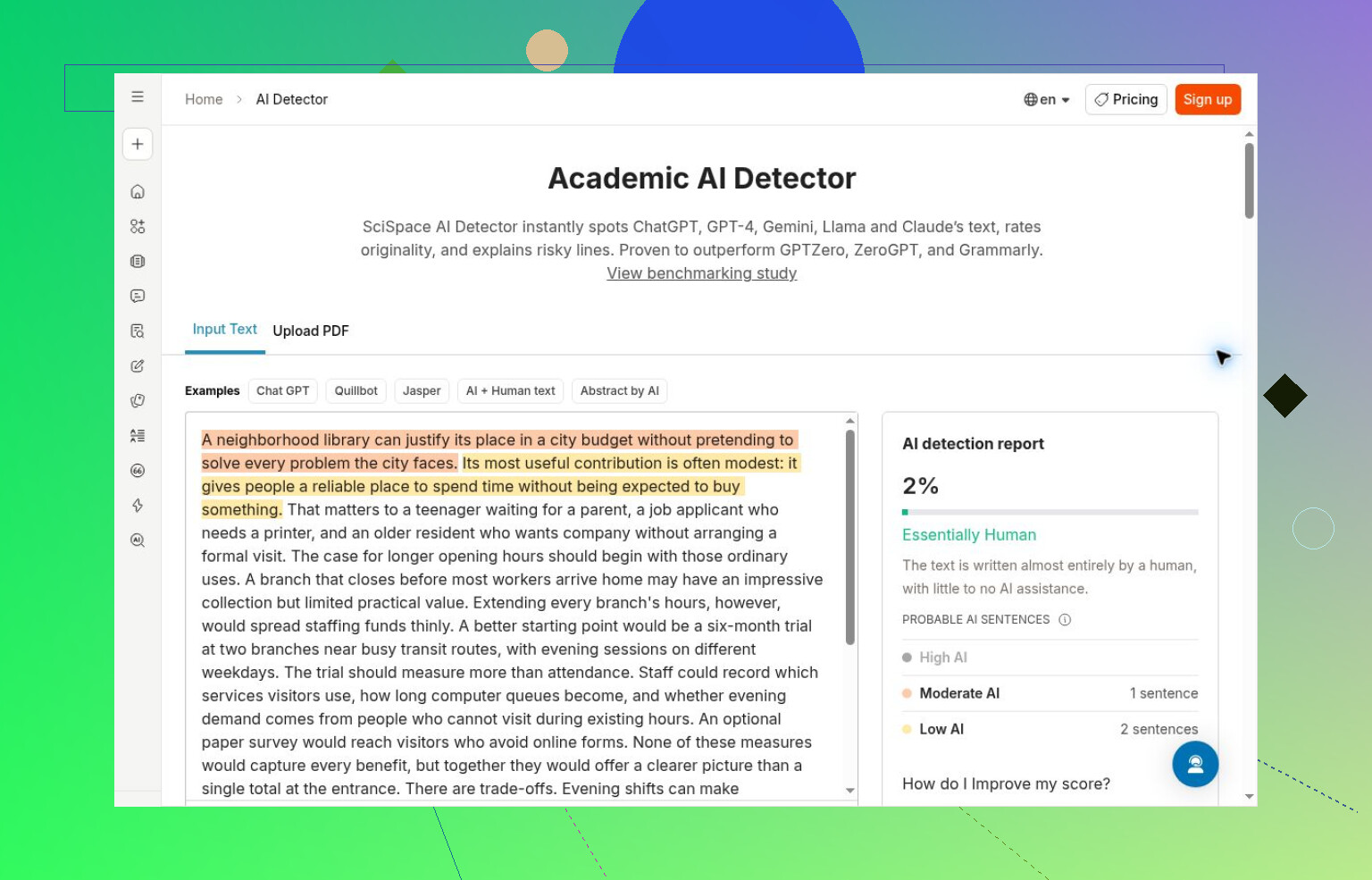
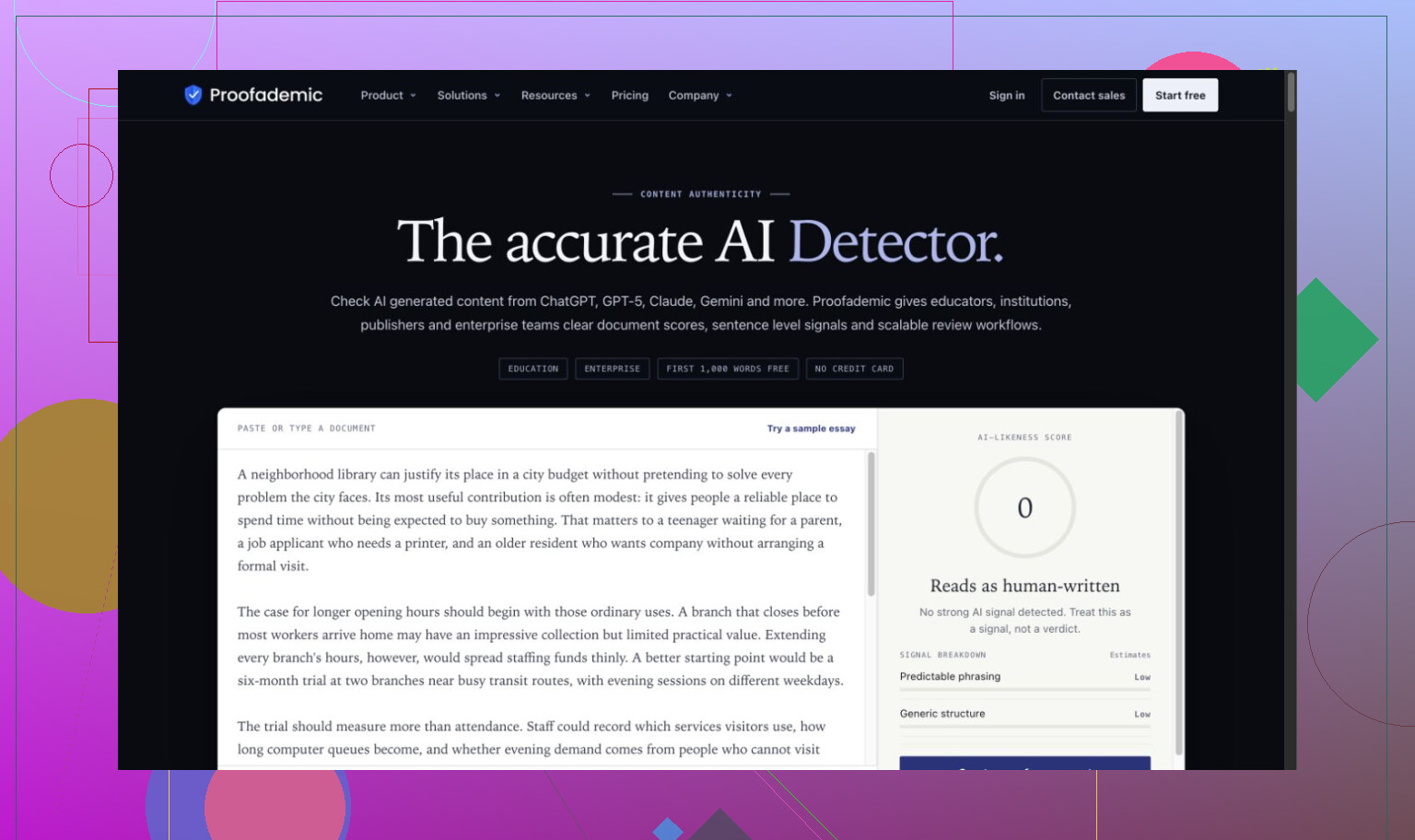
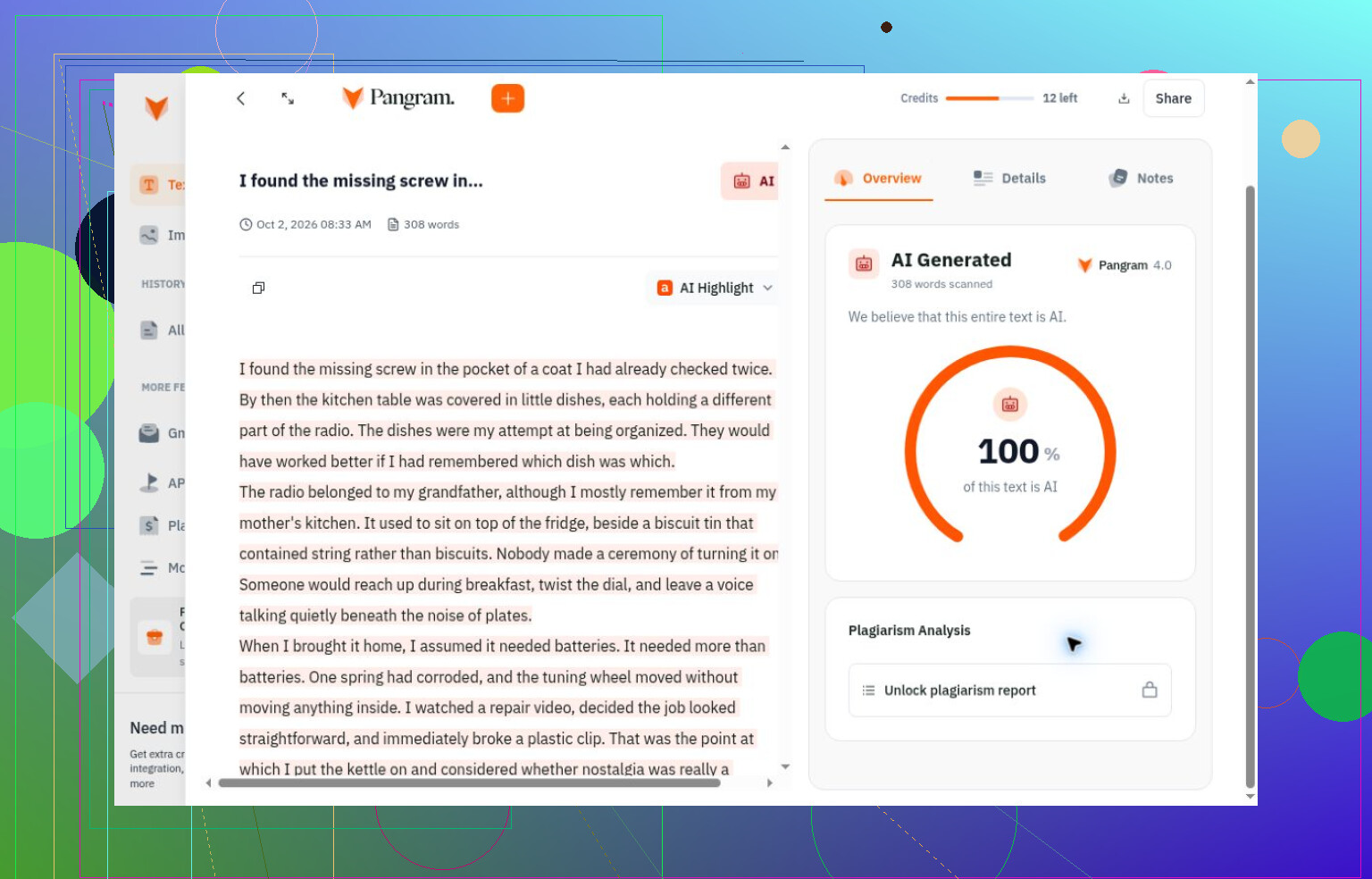
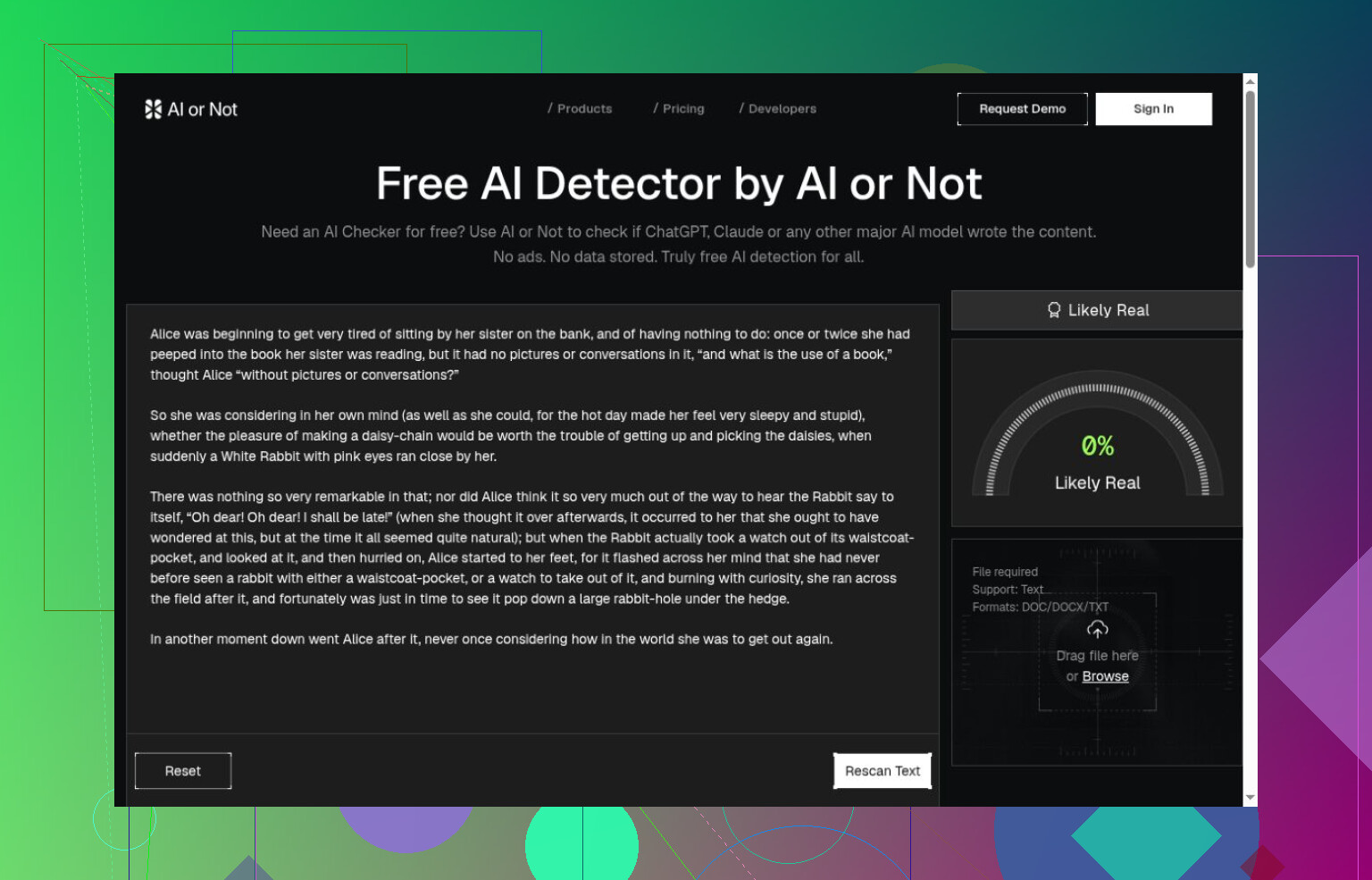
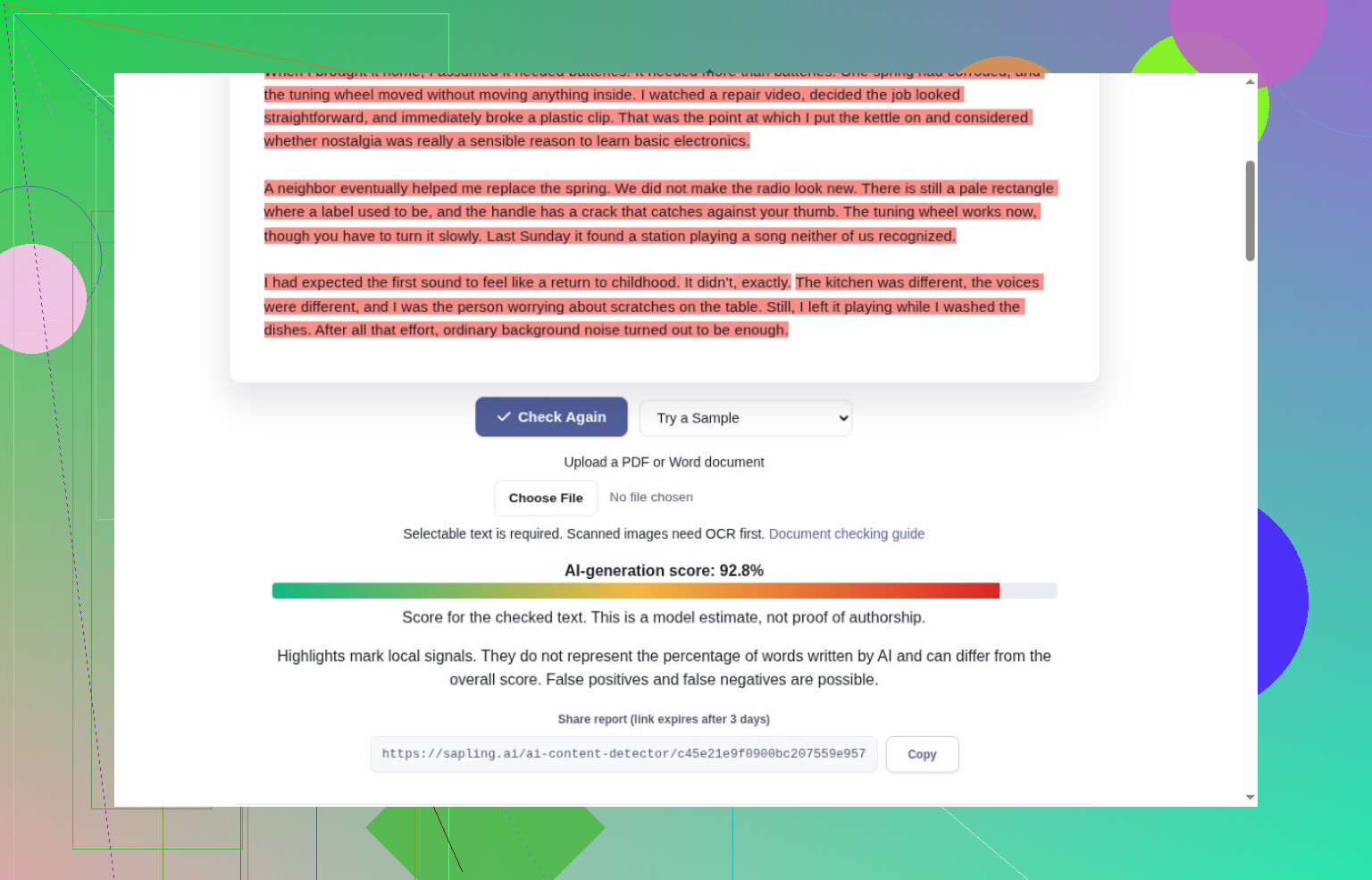
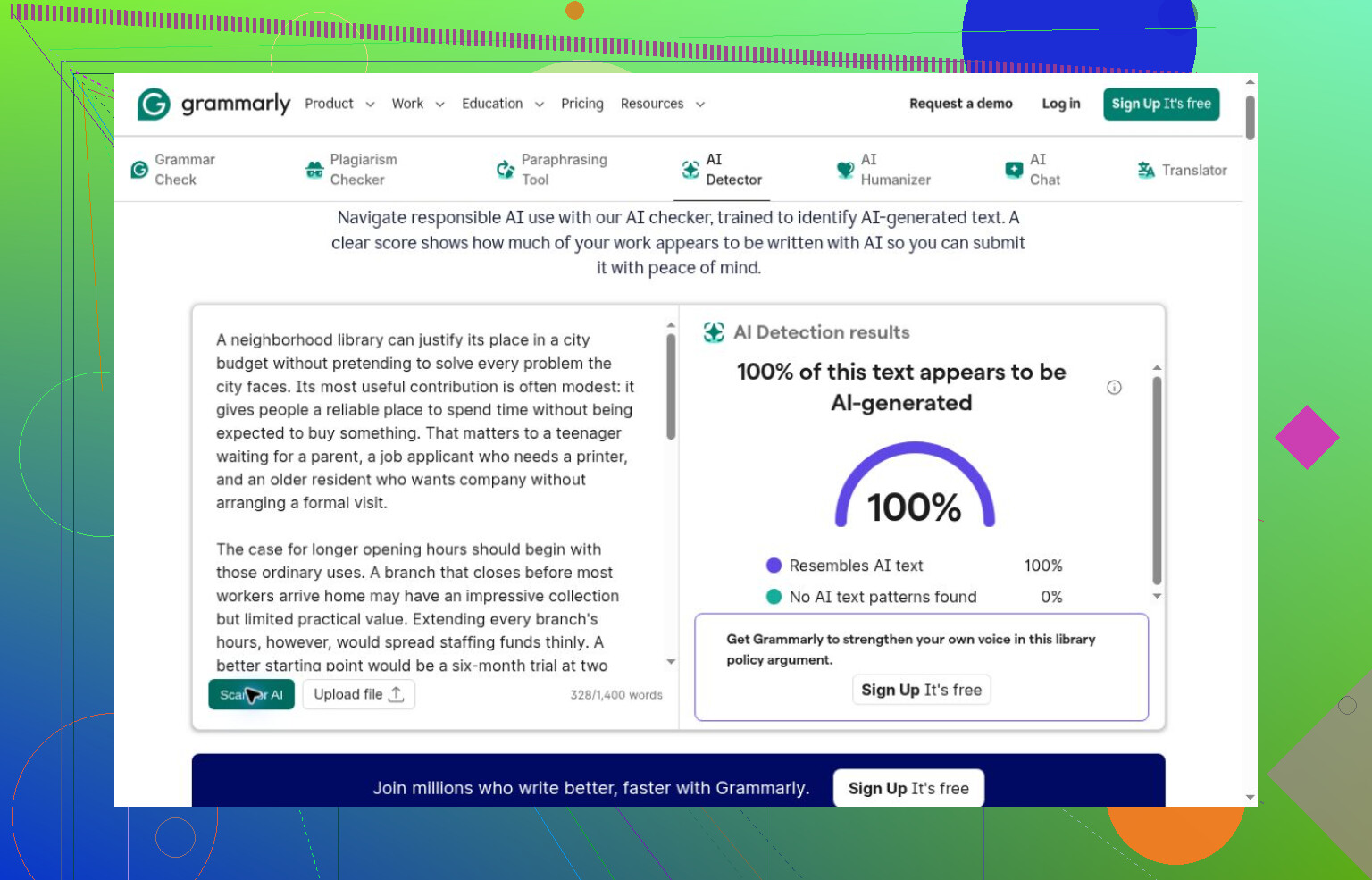
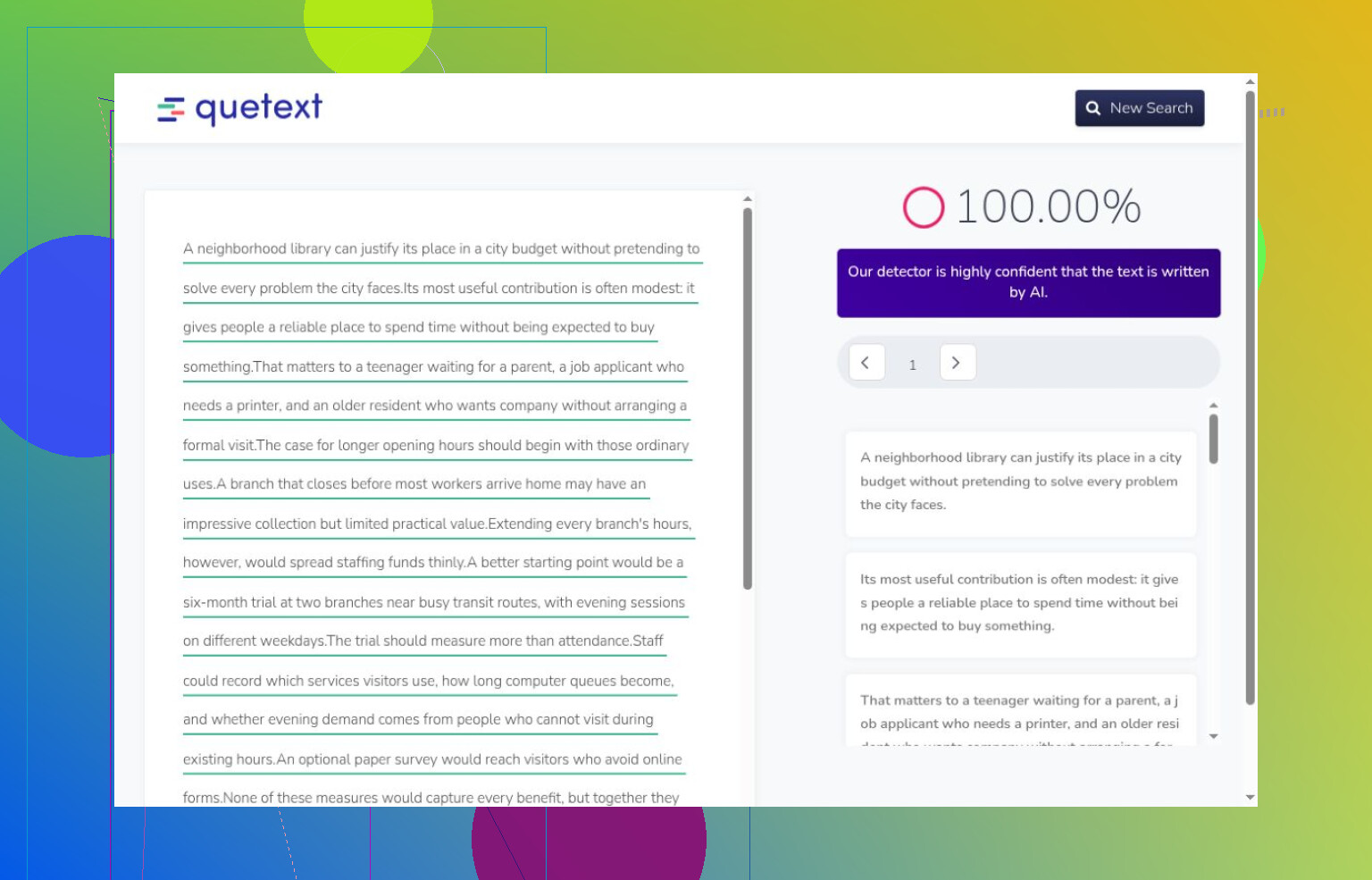
I submitted the same six English passages unchanged wherever access allowed: four generated texts, a Lewis Carroll excerpt, and that excerpt lightly edited by AI. With the Clever AI Detector, I completed the set without payment or signup. That established usable access, not general reliability. Related passages and a single literary control make this a limited comparison.
Sort the evidence before comparing tools
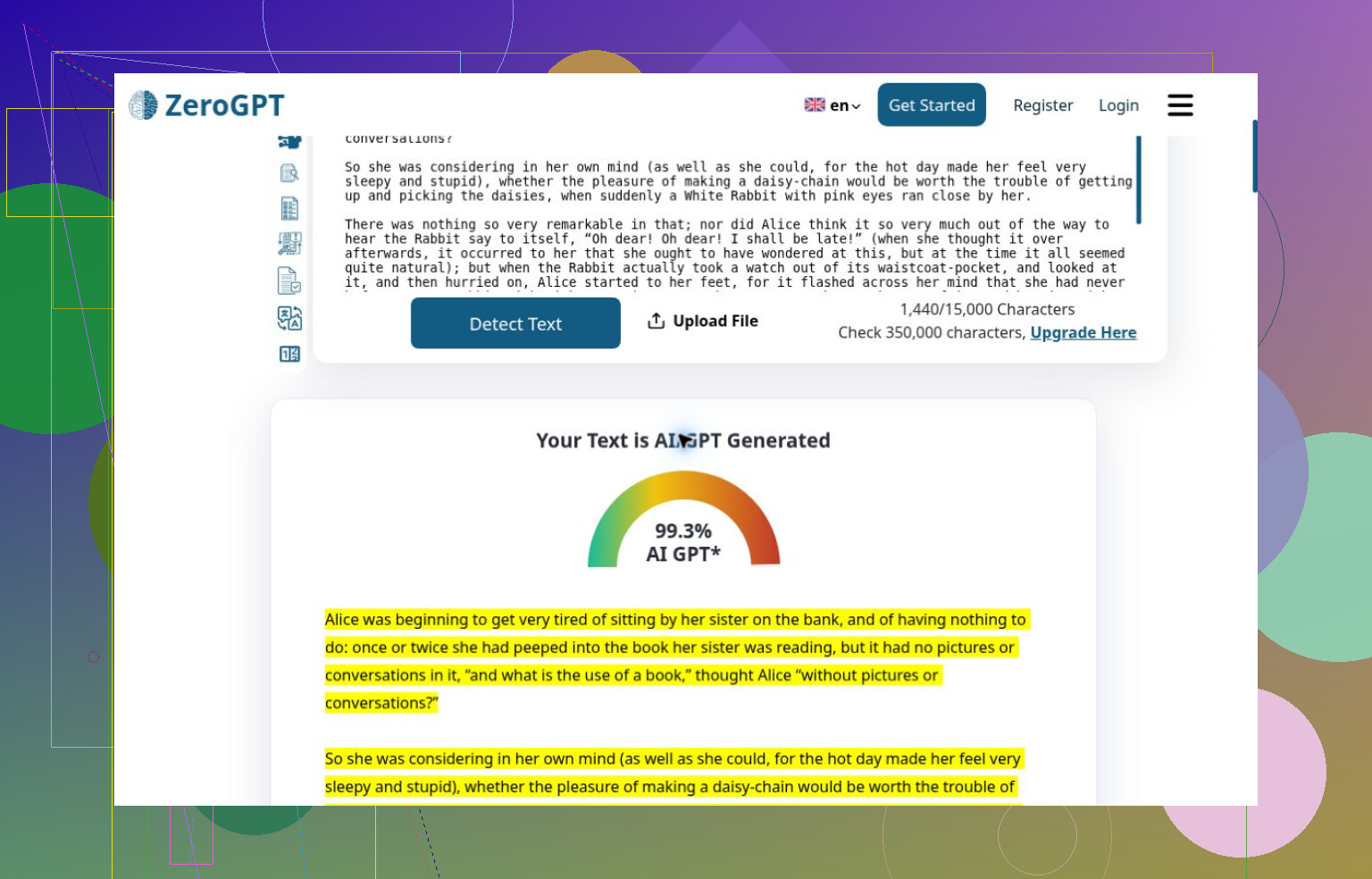
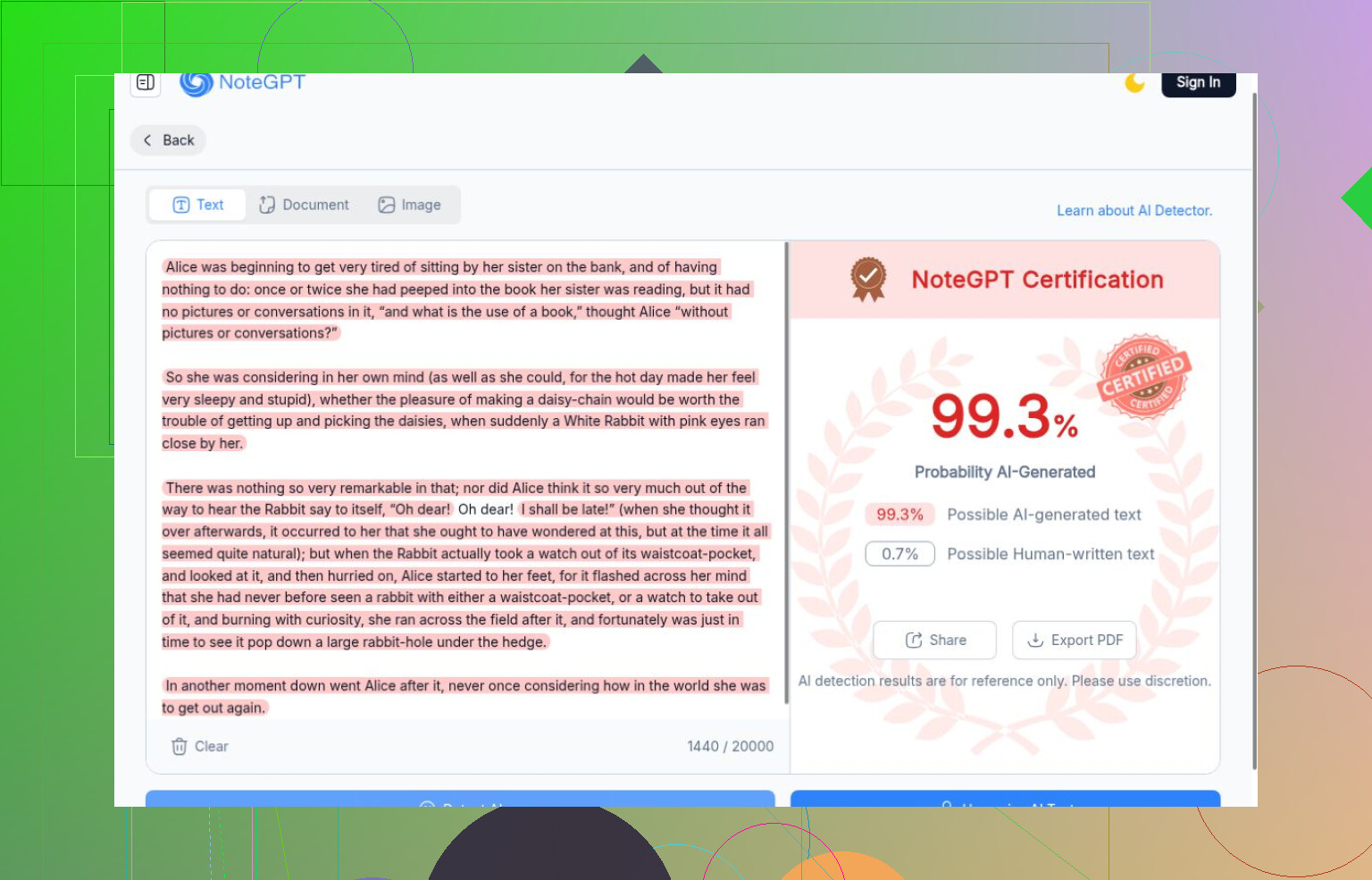
I started with errors on known material. ZeroGPT and NoteGPT assigned Carroll their strongest AI scores, including 99.3%.
Clever caught the generated passages and accepted Carroll, but also labeled the lightly edited version human. I would not treat that mixed passage as another untouched human control.
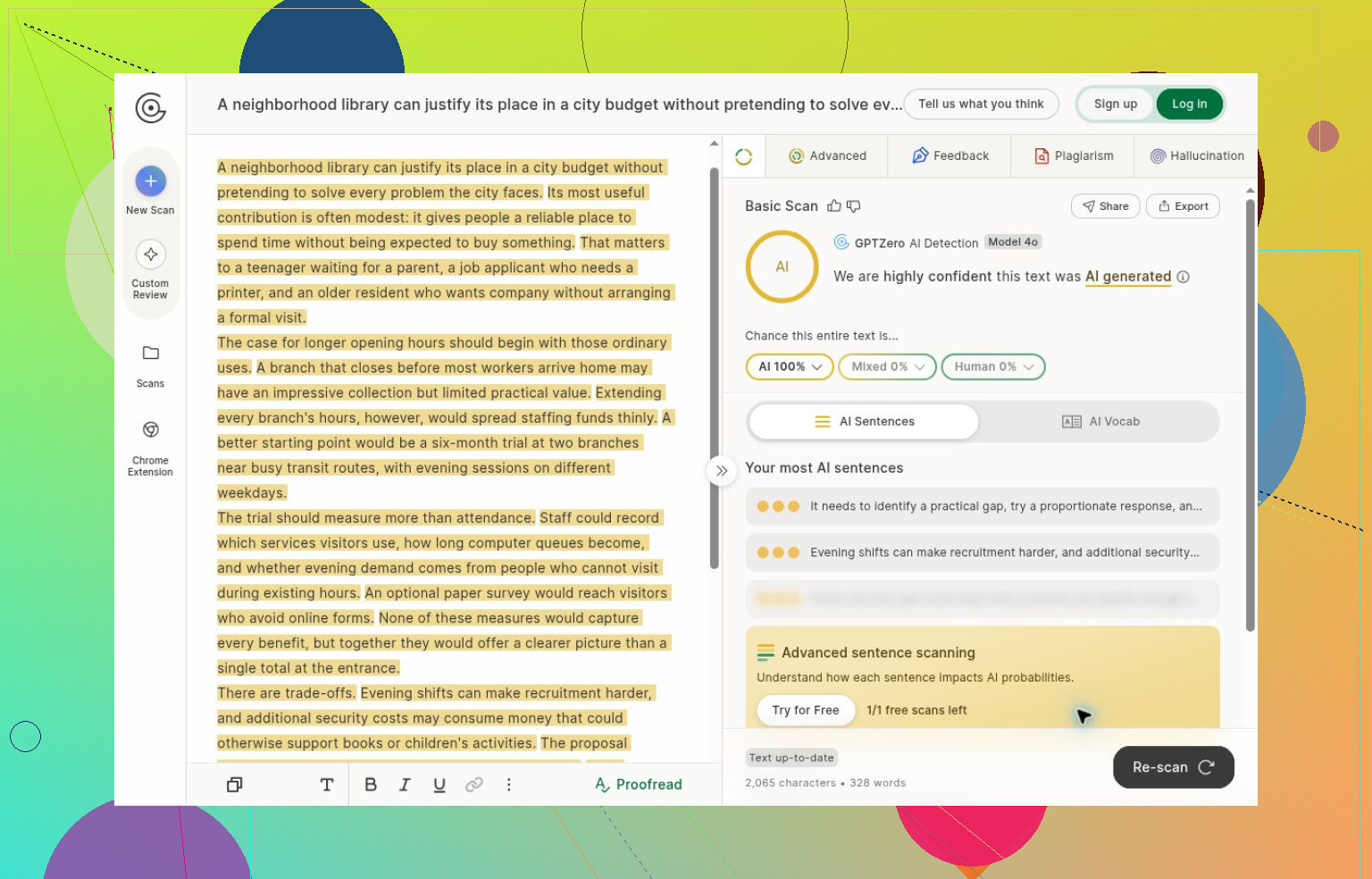
For a follow-up, I would expand the human samples before adding more detectors. I would also retain submitted text, verify that each displayed result belongs to the new submission, and exclude unfinished attempts. GPTZero’s stale onscreen score made that last distinction necessary.
Which human writing samples would you add first to make the next comparison more informative?
Do not rewrite the working printer instructions in order to please Copyleaks. I do not want “select the printer, open Properties, choose duplex” to sound fancy. It means that someone knows exactly what he needs to do in order to send a document to the printer. My goal was to get my peer through the process without being at his shoulder the whole time.
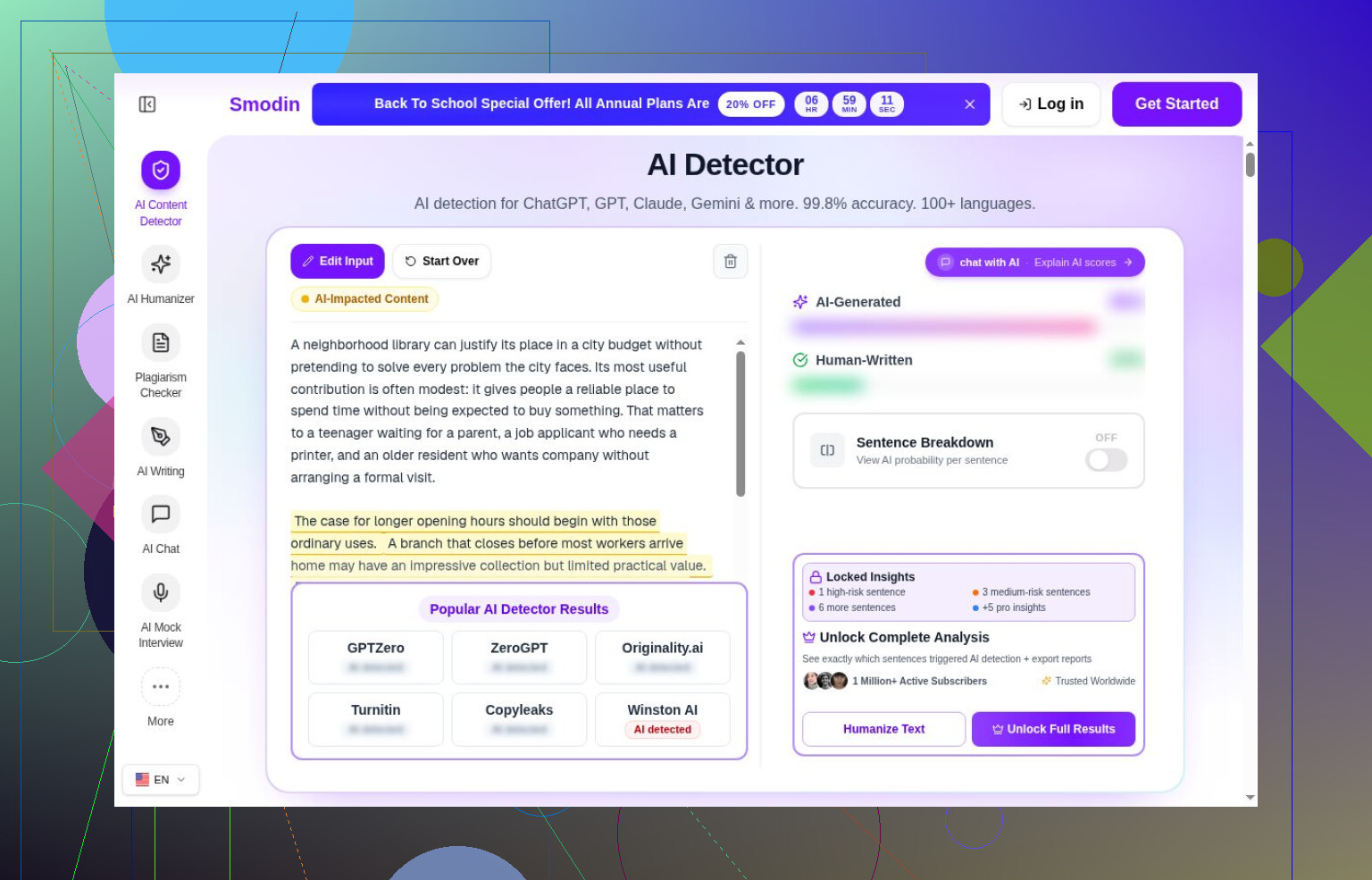
For @0xbit1’s next comparison, I’d prioritize human-written checklists and troubleshooting notes over more literary excerpts. Pick documents with a traceable drafting history and keep procedural writing separate from essays when reporting results. That would answer a more relevant question here: would you trust this detector with an ordinary office document? I’d recommend Clever AI Detector’s sentence highlighting for that comparison. Showing the specific sentences under suspicion is a genuinely useful review feature. (cleverhumanizer.ai)
Then test those flagged sentences using a different approach. Ask a subject to follow exactly the instructions you’ve prepared without any guidance, and then observe if they become confused. Then go back and rephrase the instruction if they do. And unless this test produces a better outcome, I wouldn’t change what’s clearly a good instruction just to get a different detector answer.
If the next comparison is meant to represent office writing, a blank-page draft shouldn’t be the only kind of human control. I’d want a category for documents assembled by people from existing, human-written material. That’s a different question from whether a detector can distinguish an original essay from generated text.
Think of a printer guide adapted from the previous office’s guide. Someone keeps the basic instructions, replaces the queue name, removes an obsolete step, and adds a warning about the paper tray. No AI involvement, but calling every sentence newly written by that person would be inaccurate too. The test needs room for that case without treating reuse as evidence of generation.
@0xbit1, my first additions would be a reusable onboarding checklist, a support response adapted from a saved reply, and a procedure revised by several coworkers. For this category, I’d choose source material whose human origin can be established. Otherwise, an unknown template introduces another uncertainty before the detector even gets involved. I’d keep these apart from both fresh drafts and AI-edited passages.
I would use Copyleaks and Clever AI Detector on that set. The comparison I’d care about is the original human-written document versus its human-revised descendant. Does the verdict change after someone updates the instructions for a different workplace? If it does, that wouldn’t tell us why, but it would identify a useful failure case to investigate. There’s no need to turn it into a contest over which tool wins overall.
For the printer review itself, I’d separate “the flagged section contains wording carried over from a source” from “the flagged section was generated.” Those are different claims. Your notes can help explain how the document came together, including any borrowed structure or standard wording. I’d consider a review more useful if it showed whether Copyleaks’ verdict helped answer that authorship question, rather than leaving the writer to explain ordinary editing as though it were suspicious.
Check that each verdict covers the whole submission before comparing scores. Clever AI Detector earns my vote for its complete-passage comparisons in your comparison, while Sapling’s attempt was truncated. A verdict on a half-guide should not be placed next to a ver whole-document result as if they were answering the same question.
Avoid picking whichever scan result best matches what you expected. Reading the suggestions for more comparisons, I got stuck on something simpler: if you submit a guide, change its formatting, and submit it again, which result ends up in the review? I’d want to see the first attempt, even if a later result seems more believable.
For me, those would answer different questions. The original submission shows what happened when you checked your document normally. A follow-up with the headings removed or the numbered steps turned into paragraphs would explore whether presentation affects the verdict. If the label changed, I wouldn’t know which formatting choice caused it without more checks, but I wouldn’t count the friendlier result as proof that the detector now understood the writing.
That’s where I’m less convinced that adding more tools should come next. Your saved notes give you something to compare the authorship claim against. Keeping the first scan separate from any experiments would make the review easier for a beginner like me to follow: here’s what Copyleaks reported, and here’s what happened only after you started changing the submission.
Flag a short passage like ‘open Properties, pick duplex’ for detection on its own and most detectors are thrown off, but paste the full guide and the same wording often sounds human. This length sensibility is something to look out for in your printer review. Procedural writing is short and repetitive by nature, a type of text that these tools commonly misread, so a verdict on a single highlighted section has less bearing than it seems.
I’m with @cyberpilotzone on separating reuse from generation, that’s the real trap here. Carried-over boilerplate from an old office guide will read ‘non-human’ to a lot of these models without a single prompt involved. Your saved notes are worth more than any score for sorting that out.
On the tool itself, I like how Clever AI Detector is quick on pasted blocks and doesn’t confuse my numbered steps when I put them in, which is important when the formatting is half the point. I would have run the guide whole, not cut down into the flagged part, before I read into the number.
Don’t send the office guide to more detectors without checking what you’re sharing. The push for broader comparisons skips a basic question: does the document contain internal network details, access codes, or employee information that you shouldn’t upload? If you remove those details for testing, disclose that change in the review rather than treating the edited copy as the original submission.
A false flag could generate more work than the investigation into the guide copying was supposed to save. Your notes have helped save this case, but I am inclined to be skeptical of any workflow that requires users to have a drafting history in order to mount a defense for simple printer instructions. I would consider the time spent investigating that flag to be a cost in the Copyleaks review, even if the scanning was quick.
Ask Copyleaks support how you’re supposed to dispute that flag, without uploading more office material. @corelabedge’s point about the extra work is why I’d include their response in the review. “Run it again” and “here’s how we investigate a possible error” would leave me with very different opinions of the service.