I used Decopy AI Humanizer to rewrite some AI-generated content, but the results still sounded awkward and didn’t seem as human as I expected. I’m trying to figure out if I’m using it wrong or if others had the same experience. Looking for a real Decopy AI Humanizer review, tips, and advice before I keep paying for it.
Decopy AI Humanizer
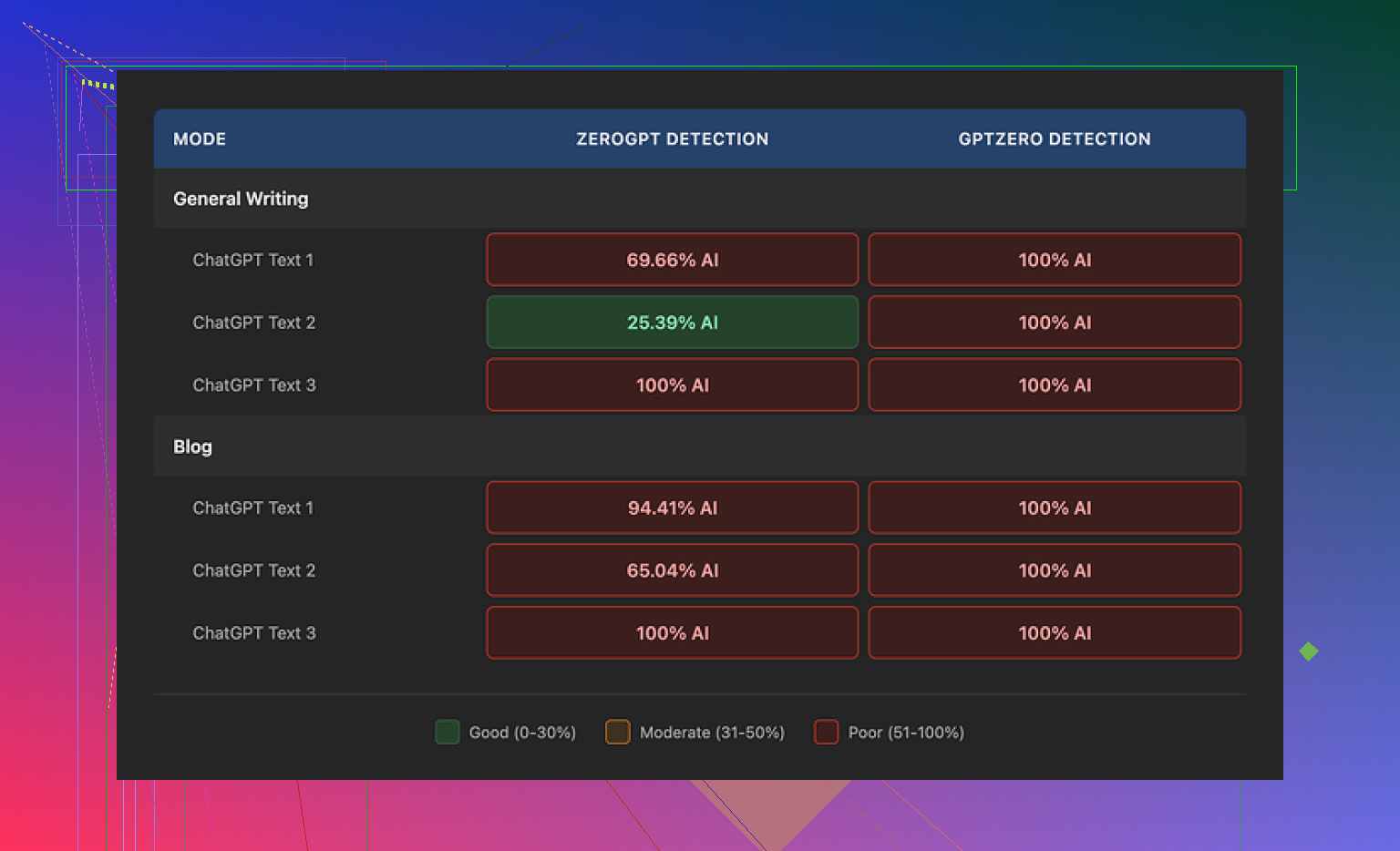
I spent some time with Decopy AI Humanizer, and on paper it looks stacked. You get 500 free runs, up to 50,000 characters in one request, eight tone options, nine purpose presets, and a sentence-by-sentence redo tool. For a free tool, that is a lot. The problem showed up when I ran the outputs through detectors. GPTZero flagged every sample as 100% AI in both General Writing and Blog mode. ZeroGPT was less consistent, but still rough, with scores bouncing from around 25% AI to 100% AI depending on the text.
One area where Decopy did better than some similar tools was grammar. I did not see it wreck sentence structure or spit out weird broken phrasing, which already puts it ahead of stuff like UnAIMyText and HumanizeAI.io from what I saw. The writing quality felt decent at first pass. I would put Blog mode around 7/10 and General Writing around 7.5/10. Still, the wording got dumbed down too much. Blog mode kept reading like it was written for a little kid. General Writing was a bit less awkward, but it still dropped phrases like 'digital stuff' and 'totally changing tech,' which made the text feel off fast. One small plus, it usually stayed close to the source length instead of shrinking everything into a stub.
I also checked the privacy side because tools like this tend to stay fuzzy there. Decopy’s policy gives a clear retention window of three months and says it follows GDPR and CCPA rules. I liked seeing an actual timeframe. What I did not find was a clean explanation of what happens to the text you paste in for rewriting, and for me that part matters more than the compliance badge.
After testing it side by side, Clever AI Humanizer gave me stronger results on detection resistance, and I did not have to pay for it.
I had the same issue. I do not think you are using it wrong.
My take is simpler than @mikeappsreviewer’s detector angle. Decopy tends to smooth text, not humanize it. Those are different things. Smooth text reads clean. Human text has odd rhythm, uneven sentence length, sharper opinions, and a few specific details. Decopy often strips those out. So the output ends up bland and a bit off.
What helped me a little:
- Paste shorter chunks, like 120 to 200 words.
- Pick one tone and keep it there.
- Redo only the lines that sound fake.
- Manually add examples, contractions, and one or two opinionated phrases.
- Read it out loud. If you would never say it, cut it.
If you want a fast cleanup tool, it’s fine. If you want writing that feels human on first pass, nah. I had to edit too much, which kind of defeats the point tbh.
I don’t think you’re using it wrong. I had a similar reaction, but I’d push back a little on the idea that it’s totally useless.
To me, Decopy is more like a paraphraser wearing a “humanizer” costume. That’s why the text can come out cleaner but still weird. It swaps words around, softens structure, and sometimes makes everything sound oddly generic. The awkward part usually comes from it flattening the original voice. So instead of sounding human, it sounds like a safe rewritten summary of a human.
Where I kinda differ from @mikeappsreviewer and @caminantenocturno is this: I don’t think detector scores are the whole story. A lot of “human” writing still gets flagged, and some terrible robotic stuff slips through. The bigger test for me is whether the output has a point of view, natural pacing, and specific wording. Decopy misses that a lot.
What I noticed is it struggles more with text that already has personality. If your draft is dry and informational, Decopy can polish it decently. If the draft needs attitude, nuance, or a strong voice, it sorta panics and turns everything into mush. That’s probly why it feels awkward.
One thing that helped me was changing the source before putting it in. Not after, before. If the original AI text is too balanced, too formal, or too “complete,” Decopy has nothing human to work with. I started feeding it messier drafts with stronger opinions, contractions, uneven sentence flow, and a few specific examples. Weirdly, the output got better because it had more texture to preserve.
So yeah, my verdict: decent cleanup tool, weak humanizer. If you expect one-click “sounds like a real person wrote this,” you’ll be dissapointed. If you treat it like a rough rewrite layer before manual editing, it’s usable. Just not magic.