I recently received a HIX bypass review decision that I don’t fully understand, and I’m worried it might affect my coverage and eligibility. The notice wasn’t very clear about why the review was triggered or what steps I’m supposed to take next. Can someone explain how HIX bypass reviews work, why they happen, and what I should do if I think there’s been a mistake? Any guidance or personal experiences would really help me figure out my next move.
HIX Bypass AI Humanizer review, after actually using it
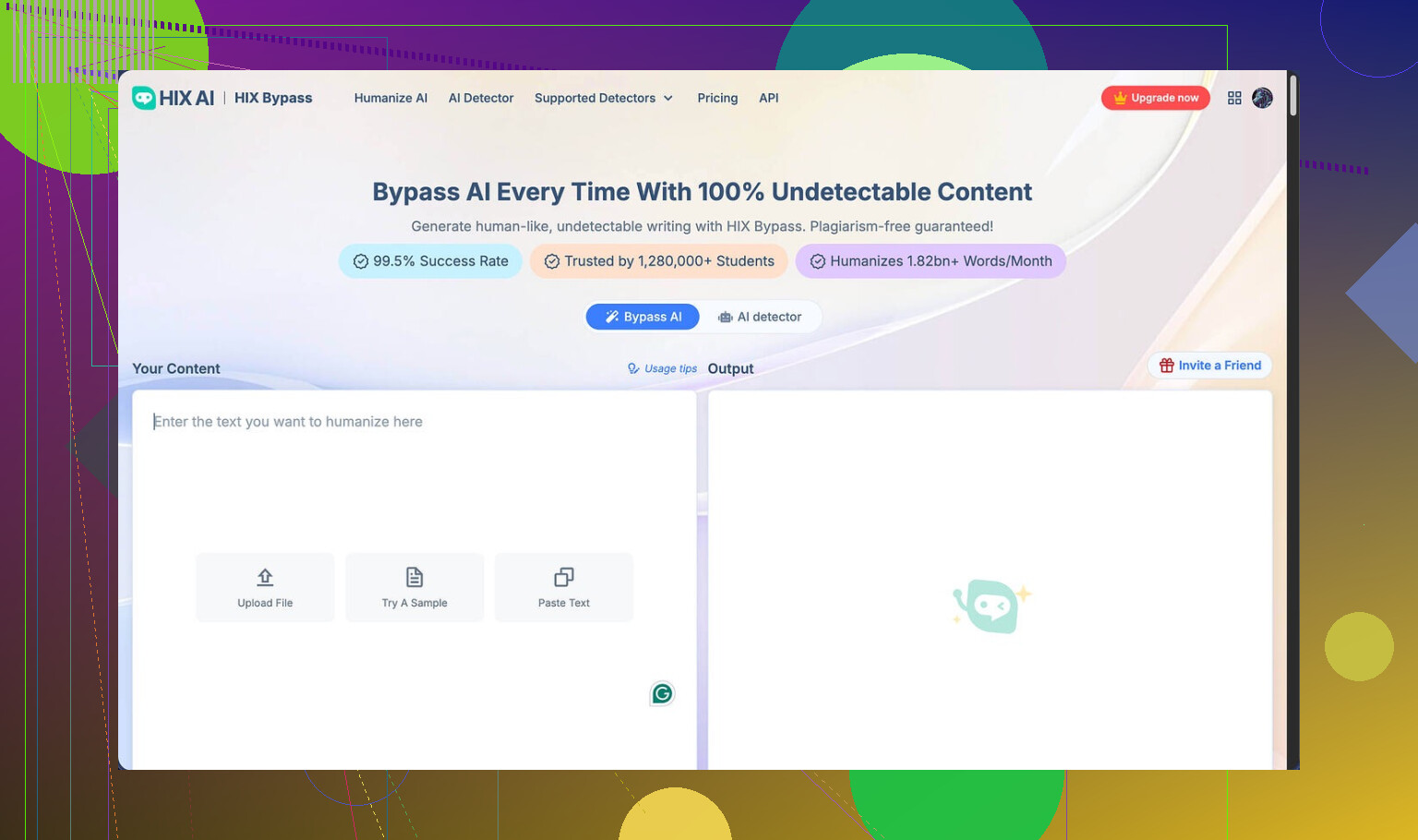
HIX Bypass has this big claim on the homepage about a “99.5% success rate,” with Harvard, Columbia, Shopify logos slapped on it. I went in a bit doubtful, tried it anyway, and here is how it went when I put my own text through it.
AI detection results
I used the same HIX Bypass output on multiple detectors to see how much of that “99.5%” claim holds up.
Link to their own promo thread:
My runs looked like this:
• ZeroGPT: both samples sailed through. Marked as human. No problem.
• GPTZero: both samples hit 100 percent AI.
So you get this weird split. On their site, the built‑in checker showed big “Human-written” results on most tools. On paper it looked safe. Then I pasted the same text into GPTZero directly, and it lit up as full AI.
The part that bothered me is the internal detector widget giving a strong “you’re good” signal when that was not true for GPTZero at all. If you rely on that dashboard without cross-checking, you walk away with a false sense of safety.
Writing quality and quirks
This is where HIX Bypass lost me.
On a rough 1 to 10 scale, I would put the writing at 4 out of 10. Not broken, but not something I would send to a client or professor without a full rewrite.
Issues I hit:
• It kept spitting out text with em dashes, even though those are a known AI tell in some detectors.
• One output had a corrupted sentence fragment. Started normally, then dropped into nonsense halfway through.
• Another sample wrapped an entire sentence in square brackets for no reason. Looked like an editing note that never got cleaned up.
The text read like a slightly scrambled version of the input. You would still need to go sentence by sentence and fix style, punctuation, and structure if you cared about it sounding like you.
Limits, pricing, and refund trap
On paper, the pricing looks tempting. The “Unlimited” yearly plan was around 12 dollars per year when I checked. Looked low enough to try on impulse.
Then the small print kicks in:
• Free tier is tiny. You get about 125 words per account. That is one short paragraph. You cannot stress test anything with that.
• The refund policy is tight. The 3‑day refund window only applies if you stay under 1,500 processed words. If you run a few medium tests, you blow past that fast and lose refund eligibility.
• Their terms of service give them room to change usage limits after you pay. So “Unlimited” does not feel like something you can rely on long term.
• They grant themselves broad rights over content you submit. Not great if you work with anything sensitive, or if you do client work.
• Free users should know their text might be used to train their models. If you paste in original work, client content, or academic writing, assume it does not stay private.
If you want to really test accuracy, those word caps are a problem. You either stay low and get almost no data, or you test properly and step out of refund range almost immediately.
What I ended up using instead
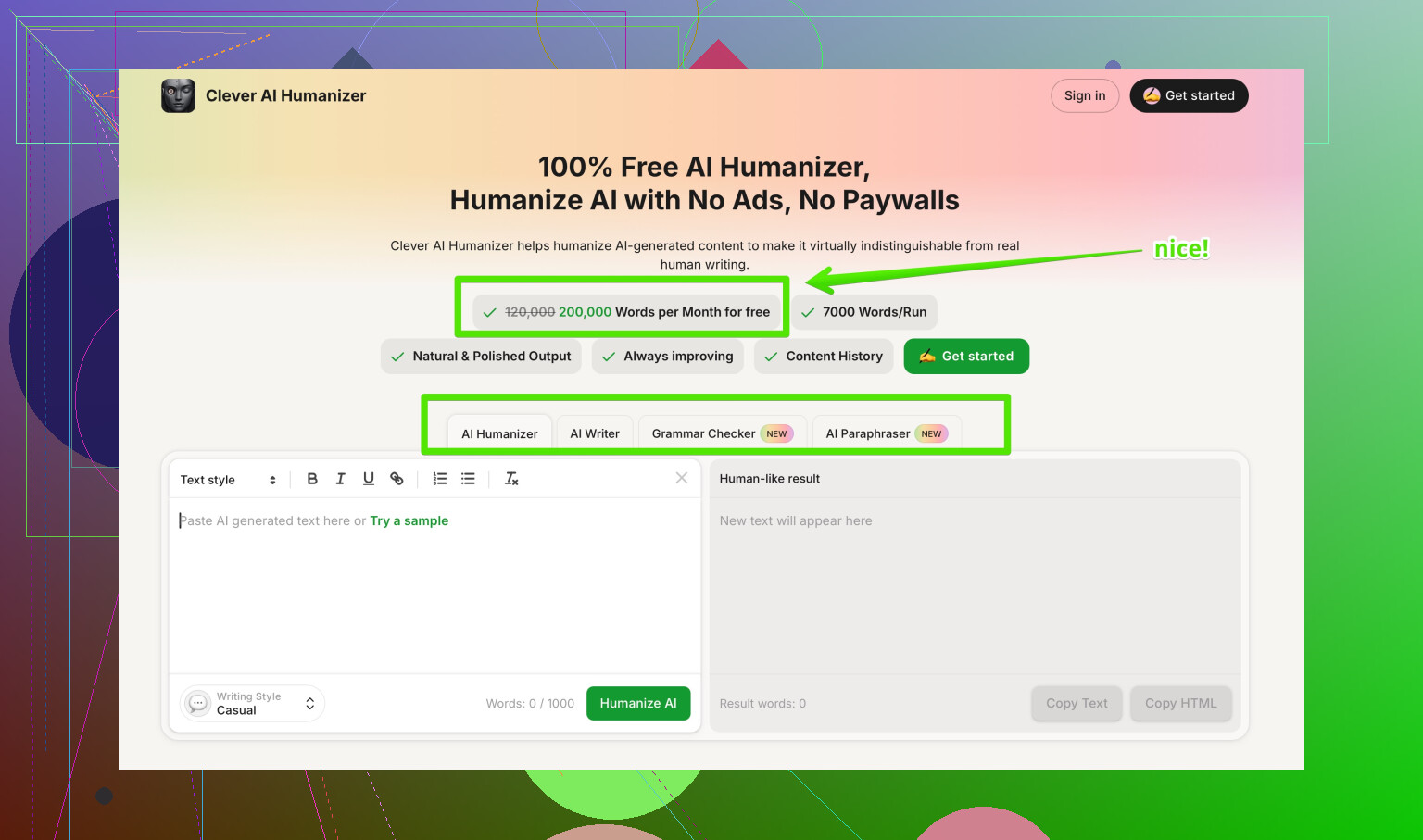
After messing around with a few tools, I had better luck with Clever AI Humanizer. No fee, and the rewrites read more like something I might write on a normal day.
You can see more discussion here:
On my runs:
• The wording felt more natural. Fewer weird brackets and no random broken fragments.
• Detection scores were stronger across multiple checkers, not only the forgiving ones.
• No stress about burning through a tiny word quota and losing a refund.
If you are only testing one or two short paragraphs, HIX Bypass might look fine at first glance. Once you start checking output across detectors and trying to use it for real work, the cracks show up fast.
HIX bypass reviews confuse a lot of people, so you are not the only one stuck with a vague notice.
First, what “HIX bypass review” usually means in the health coverage context
HIX = Health Insurance Exchange. A “bypass review” decision often means the system flagged your case for manual review instead of auto processing your eligibility. That can affect:
• Advance Premium Tax Credits
• Cost Sharing Reductions
• Medicaid or CHIP screening
• Enrollment or termination timing
Common triggers for a HIX bypass review
These are typical reasons your application gets kicked out to a special review queue:
• Data mismatch with federal or state databases
– Income from IRS data does not line up with what you reported
– Citizenship or eligible immigration status not confirmed
– Social Security number mismatch
• Inconsistent household info
– Different addresses for people in the same tax household
– Conflicting marital or dependent status
• Employer coverage questions
– You reported an employer plan offer but details are missing
– Your report conflicts with what the employer file shows
• Mid‑year changes
– You reported a change in income or household size
– You changed plans or metal levels mid year
Why the notice looks vague
States and the federal Marketplace use stock notice templates. They often say things like “We reviewed your eligibility” or “We were unable to verify some information” without naming the exact trigger. That is normal, but not helpful.
How to decode your specific notice
Grab the letter and look for:
• “Reason code” or “action code”
• References to “income,” “citizenship,” “SSN,” or “non‑ESI MEC”
• Any line that mentions “Data Services Hub,” “verification,” or “inconsistency”
If there is a code, you can call your Marketplace or state help line and read that code to them. Ask them to translate it in plain language:
• What data did you try to match
• What did you find
• What year of income did you use
• What is missing from my file
Concrete steps you should take now
-
Confirm your current coverage status
Ask directly:
• Is my plan active right now
• Are my tax credits or CSR reduced, unchanged, or terminated
• Is this review about future months, past months, or both -
Ask for the “case notes” explanation
Most call center systems have free‑text notes that describe why the review triggered. Ask them to read or summarize case notes, not only the standard script. -
Verify income data
If the review links to income, they often compare:
• Your attested income on the application
vs
• Latest IRS data or state wage database
If your income dropped compared to the last tax year, they might want proof. Useful documents:
• Last 4 to 8 pay stubs
• Self‑employment ledger or profit and loss
• Unemployment benefits letter
• Social Security award letter
• Letter explaining a job loss or hours cut
Send exactly what they ask for. Do not flood them with unrelated stuff.
- Check identity, citizenship, and immigration items
If the notice mentions:
• “Citizenship not verified”
– Submit birth certificate, US passport, naturalization certificate, or similar
• “Immigration status not verified”
– Submit green card, work authorization, I‑94, or other listed document
• “Unable to verify SSN”
– Make sure the number, name, and date of birth match your Social Security card
- Watch deadlines
Eligibility systems set strict deadlines. Common patterns:
• 30 or 60 days to provide documents
• If you miss the deadline, APTC drops to zero
• If you later fix it, they restore APTC prospectively only in many states
Mark the deadline on your calendar. Send documents at least a week before.
- Use local help
Call:
• Marketplace call center
• Local navigator or assister
• Legal aid or health advocacy groups
A navigator can sit with you, read the notice, log into your account, and tell you exactly what triggered the HIX bypass and what to upload.
Where I slightly disagree with @mikeappsreviewer
They focused on HIX Bypass as an AI humanizer product and how reliable it is across detectors, which is useful if you are rewriting text to avoid AI flags. For your situation, the bigger issue is clarity of communication, not only detection scores. If you plan to write an appeal, explanation letter, or complaint about the HIX review, you need something that reads natural and clear to a human reviewer.
On that part, a tool like Clever AI Humanizer can help polish your explanation text so it sounds more like everyday writing and less like AI output. If you go that route, still read every line and tweak it so it reflects your own voice and facts.
For example, you could write a short statement like:
“I received a HIX bypass review decision. I believe my income for this year is lower than the IRS data you used. I lost my job in March and started a lower paying job in May. I attached my recent pay stubs and a letter from my former employer. Please update my eligibility to reflect my current income.”
You can then paste that into a tool like make your explanation letter sound more natural to human reviewers, review the output, and adjust anything that feels off.
SEO friendly version of your topic description for clarity
“HIX Bypass Review Decision, What It Means And What To Do Next”
If you received a HIX bypass review notice from your Health Insurance Marketplace and you are unsure what it means, you might worry about your coverage and eligibility. These decisions often relate to a special review of your income, citizenship, or household information. The letter does not always explain why the review started or what steps you need to take. To protect your health coverage, you should confirm your current eligibility status, check for any document requests, and contact the Marketplace or a local navigator for help. If you need to submit an explanation or appeal in writing, using a tool like Clever AI Humanizer can help you write clear, natural text that is easy for caseworkers to understand.
Yeah, these “HIX bypass review” notices are a mess, you’re not alone at all.
@mikappsreviewer and @himmelsjager already covered the basics of what a HIX bypass is and how the system flags you. I agree with most of that, but I think they still assume the notice is at least semi useful. In a lot of cases it really isn’t, and you end up guessing what the system did behind the scenes.
Here is how I’d tackle it without rehashing the same step by step checklist they gave:
- Treat the decision as tentative
A HIX bypass review decision usually reflects what the exchange system did when it could not auto resolve something. It does not always mean “final” for your coverage. Think of it like a placeholder:
- It might temporarily change your tax credits or cost sharing
- It might be based on outdated IRS or wage data
- It can often be corrected with very targeted proof
So do not assume you have to just accept it as-is.
- Focus on what changed rather than why it triggered
Since your letter is vague, log into your Marketplace account and compare before and after:
- Did your premium go up
- Did your APTC number drop
- Did your CSR level change
- Did anyone in the household lose coverage or get switched to “ineligible”
Once you see what actually changed, you can back into the likely reason. Example: if your APTC dropped to zero but plan is still active, that usually screams “income verification problem” more than anything else.
- Use the account screen, not just the PDF
The online account is often clearer than the mailed notice. Under “Eligibility” or “Details” you can usually see:
- The program each person is eligible for
- Whether proof is needed for income, citizenship, or immigration
- The exact due date for documents
Sometimes the portal shows “data inconsistency” flags that never appear plainly in the letter.
- Do not over submit documents
This is where I slightly disagree with how people often react. The instinct is to upload every pay stub since 2019, five IDs, and a novel of explanation. That can actually slow things down. The system and reviewers look for very specific proof:
- If it is income related, send a clean set of recent pay stubs or a short profit and loss for self employment, nothing more
- If it is citizenship or immigration, send exactly the document types they list, not twenty extras
- If it is SSN or identity, double check spelling and DOB first then send a copy of the card or ID only if they explicitly ask
Targeted is faster than “kitchen sink” submissions.
- If you got moved to Medicaid or out of it
A lot of HIX bypass reviews are about the Medicaid vs Marketplace line. The system might decide you “should” be Medicaid eligible based on old income, or the opposite. That can:
- Kick your application over to the state Medicaid agency
- Delay your Marketplace coverage start or continuation
- Confuse the heck out of your notice wording
In that situation, call both entities: the Marketplace and, if they say your case is at Medicaid, the Medicaid office. Ask a very direct question:
- “Which program thinks they are responsible for my coverage right now”
Do not hang up until someone can answer that in plain English.
- Appeal wording and explanation letters
If the decision is obviously wrong and you want to appeal or send a clarification, written explanations do help. The catch is that anything that sounds too auto generated can get side eyed now that AI is everywhere.
Here is a simple structure that works well for these letters:
-
One short paragraph stating what happened:
“I received a HIX bypass review decision dated [date] that changed my eligibility and lowered my premium tax credits.” -
One paragraph stating what is wrong:
“The decision appears to rely on prior year IRS income. My current income is significantly lower.” -
One paragraph with facts and attached proof:
“I was laid off on [date] and started a new job on [date]. My current gross monthly income is [amount]. I have attached [list of documents]. Please update my eligibility to reflect this current income.”
If you are worried your text sounds stiff or “AI sounding” you can run your draft through something like Clever AI Humanizer. It is basically meant to make AI looking or over formal text feel more human and natural. Just make sure you still read it line by line and correct any weird stuff so it matches your actual situation. Do not blindly trust any tool’s “this is human now” score. Even @mikeappsreviewer pointed out that different detectors totally disagree, which is the whole headache with tools like HIX Bypass in the first place.
- Call and ask for the actual internal explanation
When you call the Marketplace, do not just ask “what does this letter mean.” Ask specific things like:
- “What data source triggered my HIX bypass review”
- “Which field on my application did not match your records”
- “Did you base this decision on last year’s tax return, current wages, or some other file”
Sometimes they can read internal notes that are much clearer than the templated text you got.
- Time sensitivity
The part people underestimate: if there is a document deadline, the system usually does not care whether you understood the notice. If it says 30 or 60 days, aim to send your proof within a week or two. If you miss it, they may:
- Cut off APTC
- Keep your plan but at full price
- Fix it only going forward if you resolve it later
So even if the trigger is unclear, err on the side of sending the most likely proof based on what changed, then follow up.
- One more thing about AI tools and letters
Since you mentioned reading HIX Bypass reviews and such, keep expectations realistic. AI humanizers and detectors are all over the place. Some detectors flag human text, some let heavily edited AI text slide. That is why relying on a single “99.5 percent safe” claim is risky.
For Marketplace or Medicaid letters, the real goal is not “beat AI detection” but “be easy for a tired caseworker to read.” Short sentences, clear dates, plain money amounts. If a tool like Clever AI Humanizer helps you get there faster, cool. Just do not let it invent facts or overcomplicate your wording.
- Quick tweak for your topic line
If you want more people to find your post or similar info, something like this is clearer and more search friendly:
“Health Insurance Exchange Bypass Review Decision: What It Means and How to Protect Your Coverage”
And if you are comparing tools for making your text sound less AI generated, there is a decent community breakdown here:
detailed Reddit discussion on choosing the best AI humanizer
Bottom line:
- Figure out exactly what changed in your eligibility
- Use the portal plus a phone call to identify the most likely trigger
- Send only the specific proof they actually need
- If you appeal, keep it short, factual, and in plain language, and use something like Clever AI Humanizer only as a helper, not as the final word.