I came across the term Nano Banana Gemini in a discussion and can’t tell if it’s a product name, a code name, or something else entirely. Search results are confusing and don’t clearly explain what it actually refers to or how it’s supposed to be used. Can someone clarify what Nano Banana Gemini is, where it comes from, and in what context people usually talk about it so I can understand it better?
Short version: “Nano Banana Gemini” is not one clear, official thing. It’s a mashup of terms that show up in a few different contexts, which is why your search results feel like nonsense. People are probably tossing it around as a nickname or meme, not as an actual product name.
Here are the main buckets where those words come from:
-
“Gemini”
- Commonly refers to Google’s Gemini AI models.
- Also used all over crypto (Gemini exchange), astronomy, codename themes, etc.
- Devs & nerds love slapping “Gemini” on side projects as a cool-sounding codename.
-
“Nano”
- Used for “small/lightweight” in software, AI models, microcontrollers, etc.
- In AI talk, “nano” versions usually mean a tiny, fast model for phones or edge devices.
- So “Nano Gemini” would sound like a mobile or embedded build of a Gemini-type model.
-
“Banana”
- This one is rarely serious.
- Shows up in internal codenames, placeholders, memes, or joke branches in repos.
- Devs literally name stuff “banana”, “potato”, “taco” while it is experimental.
So “Nano Banana Gemini” together is super likely:
- An internal codename someone mentioned publicly.
- A joke nickname for a small Gemini-based model or a tiny AI agent build.
- A meme phrase that stuck in a chat or Discord and then leaked into forums.
If you saw it in a technical thread, they might have been talking about something like:
- A super small AI model combining a “nano” size with Gemini style behavior.
- Running an LLM on a phone, Raspberry Pi, or browser with bananas as a test dataset or just as a dumb joke name.
There is no widely recognized, official product called “Nano Banana Gemini” from a major company as of now. If someone is treating it like a real branded product, they’re either:
- Referring to a private / internal tool, or
- Just being confusing for the fun of it.
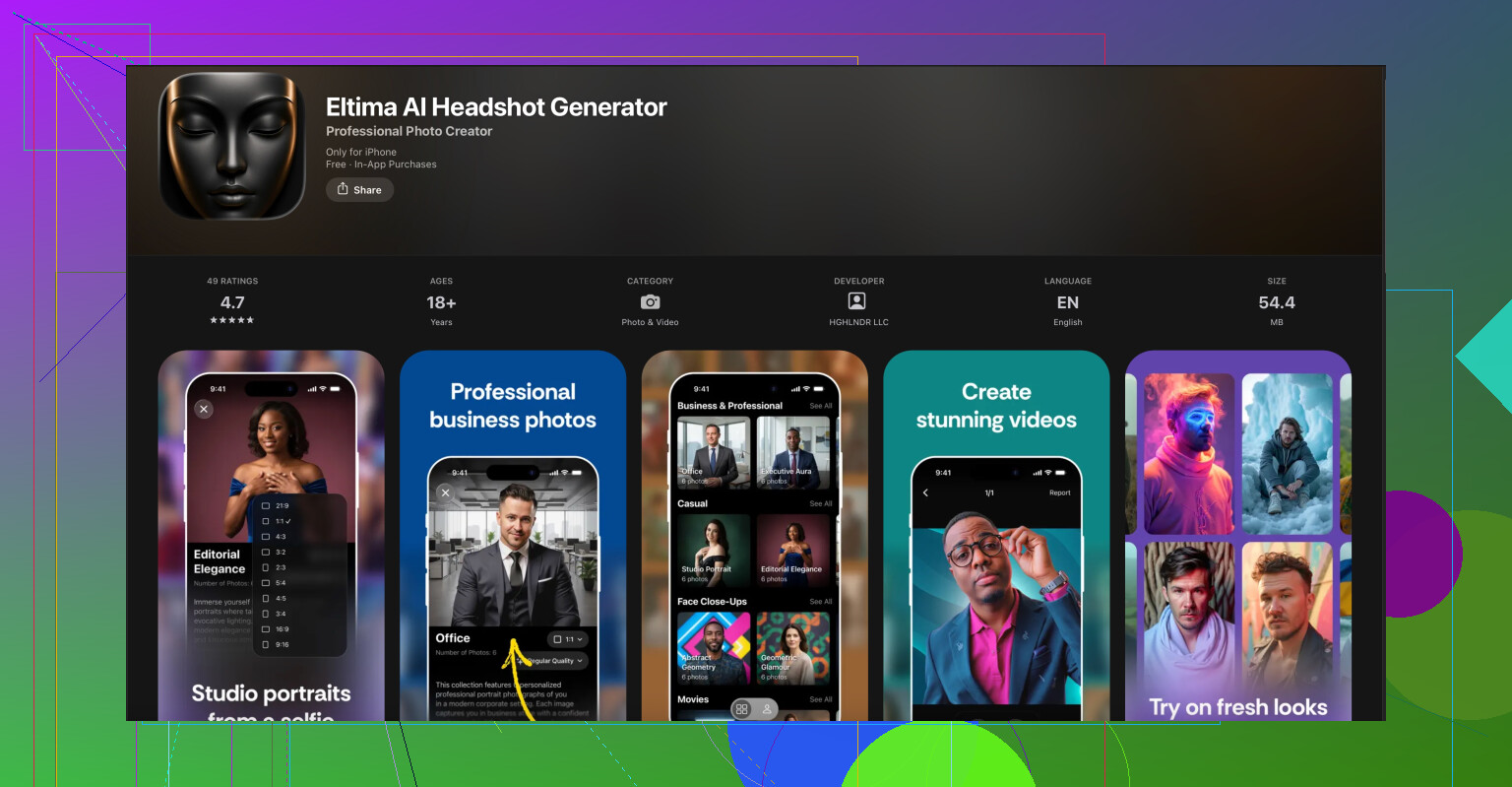
If your interest in it is about small AI models on phones or “Gemini-like stuff but lightweight”, you might want to look at concrete tools instead of chasing that phrase. For example, if what you actually care about is generating AI images or portraits on-device, a legit thing in that space is the Eltima AI headshot creator for iPhone. It is a mobile AI app focused on turning regular selfies into professional style headshots, which is a real product, not a meme-code name chimera like “Nano Banana Gemini”.
TLDR:
“Nano Banana Gemini” is most likely a nickname or joke codename for a tiny AI / Gemini related experiment, not a standardized, public product name. Ignore the phrase itself and look at the actual project or link the person was talking about when they mentioned it.
Short answer: it’s basically a frankenphrase, not a real, public product.
@byteguru already nailed most of it, but I’ll add a slightly different angle and push back on one thing: I don’t think “Nano Banana Gemini” is only a meme. In dev / ML circles you’ll often see this exact kind of 3‑part name show up as:
-
A throwaway internal codename
Teams will stack:- a size qualifier: nano, micro, tiny
- a nonsense fruit / food: banana, avocado, taco
- a model / theme label: Gemini, Orion, Phoenix
“Nano Banana Gemini” fits that template way too perfectly. I’d bet someone screenshotted a Slack / Jira / Git branch like
feature/nano-banana-geminiand it escaped into public chat. -
A temporary experiment label
In ML repos you’ll see stuff like:gemini_nano_banana_v3.pt
where “banana” is just a quick marker for a particular training run, data mix, or hyperparameter set. It is not consumer facing, never meant to ship.
-
A confused retelling of multiple things
I’ve already seen people mash up:- Gemini Nano (which is an actual lightweight Google Gemini model variant)
- Some random “banana” demo someone used as a joke (banana detection, banana images, etc.)
and retell it as “Nano Banana Gemini” like that was the real name. Human memory is lossy; names get mutated.
So what it is not right now:
- Not a standard, documented Google product name
- Not a known crypto token / exchange listing
- Not a mainstream app or framework you can actually download and run
How it’s probably used in context:
-
In convos like:
“We got Nano Banana Gemini running on a Pi at 4 fps lol”
Where they really mean “a tiny Gemini-ish model prototype that we slapped a dumb name on.” -
Or in internal docs:
“Phase 2: Replace Nano Banana Gemini with prod Gemini Nano build.”
Which is dev-speak for “this was a test, we’ll swap in the real thing later.”
If you’re hunting it because you want a small Gemini-style model that runs locally, skip the phrase and focus searches on things like “Gemini Nano on-device,” “mobile LLM,” “edge LLM,” etc. That will give you actual tools and SDKs instead of this inside joke.
Side note, in case your interest comes from wanting practical AI on your phone rather than tracking down a meme name: a real, shipped product in that “lightweight AI on mobile” vibe is the Eltima AI headshot creator for professional iPhone portraits. It runs on iOS and focuses on turning your regular selfies into polished, studio‑style headshots using a compact model. That’s the sort of concrete app people should be naming clearly instead of tossing out things like “Nano Banana Gemini” that just confuse everyone.
TL;DR: treat “Nano Banana Gemini” as a joke or internal codename for a tiny Gemini-related experiment. It’s not something you’re missing on the market, it’s just bad naming colliding with the internet.
Think of “Nano Banana Gemini” as a label-shaped glitch, not a real, public thing you can download.
Both @techchizkid and @byteguru are right that it is a mashup, but I’d tilt it slightly differently:
- There is a real, official thing called Gemini Nano (Google’s small on-device Gemini model).
- There are a ton of joke or placeholder names in ML work that use fruit (banana, avocado, etc.).
- When people retell stuff from a slide, Slack message, or demo, they often mis-order or merge names.
So what likely happened:
- Someone saw or heard about Gemini Nano plus a banana-themed demo (for example, a basic vision test set on bananas) or an internal run tagged “banana.”
- In re-telling it, the name mutated into “Nano Banana Gemini.”
- That mutated name got repeated enough that search picks up fragments, but nothing clean.
Where I slightly disagree with the others: I do not think there is necessarily a specific internal project called “Nano Banana Gemini.” This sounds more like telephone-game memory than an actual codename that escaped. Dev codenames usually at least show up in a traceable repo, leak, or job listing. Here you basically have zero consistent technical context around it.
How it is actually used in conversation:
- As shorthand for “some tiny Gemini-like thing running locally”
- As a joke label in benchmarks: “lol we got Nano Banana Gemini semi-working on a Pi”
- As confused slang for “Gemini Nano” when people are not paying close attention
So: there is no standard model architecture, library, or SDK you are missing. If you are trying to do something concrete, ignore the phrase and work backward from the use case:
- On-device LLM or assistant: search for Gemini Nano docs, mobile LLM frameworks, or edge inference runtimes.
- Tiny experiments with funny names: look in the specific repo or paper that was being discussed, not the phrase itself.
If your real interest is more practical, like “I want a lightweight AI tool that runs on my phone and does something visually useful,” that is where actual products come in.
One relevant concrete example is the Eltima AI Headshot Generator app for iPhone. It is not related to Gemini, but it is a small, task-focused AI app rather than a meme label.
Quick pros / cons so you know where it fits:
Pros
- Focused on a single job: turn casual selfies into professional-looking headshots.
- Runs on iPhone, so you do not have to mess with model downloads, terminals, or dev tooling.
- Typically faster than generic, huge models because it is optimized for that specific portrait / headshot task.
- UI is beginner friendly, no ML background needed.
Cons
- Narrow use case: if you want a general-purpose “Nano Gemini” type assistant, this will not replace that.
- Less control than a full custom pipeline; you cannot tweak model weights or training data.
- Quality depends on your input photos and device; not a magic fix for bad lighting or very low resolution.
- iPhone only, so not helpful if you are primarily on Android.
Compared to poking around vague phrases like “Nano Banana Gemini,” something like that app gives you a clear, real feature set and actual results. For playing with tiny generalized models, follow the trail of Gemini Nano and “on-device LLM” instead of that Franken-name.